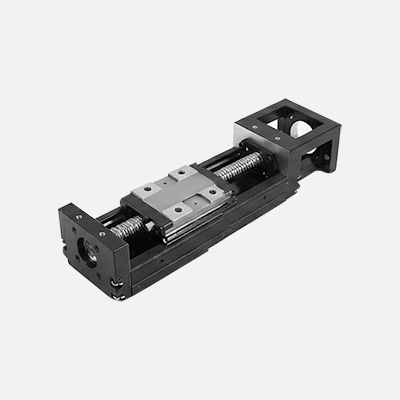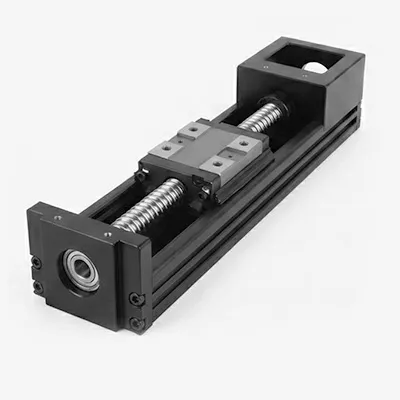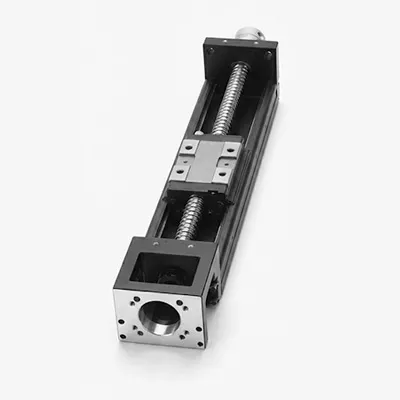
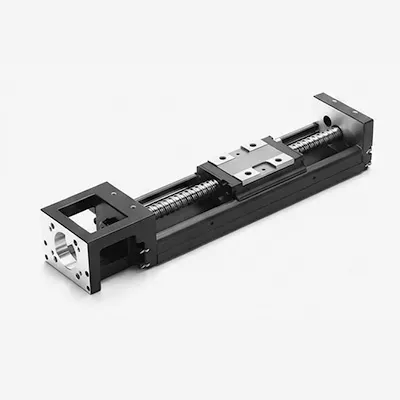
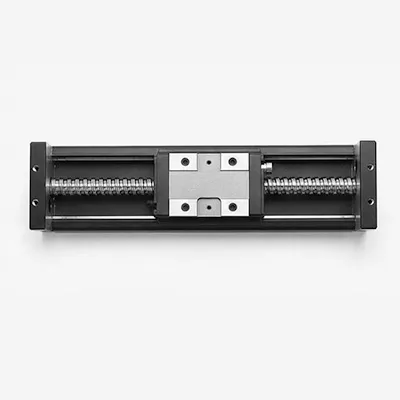
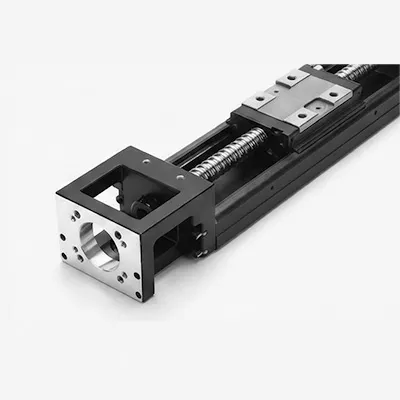
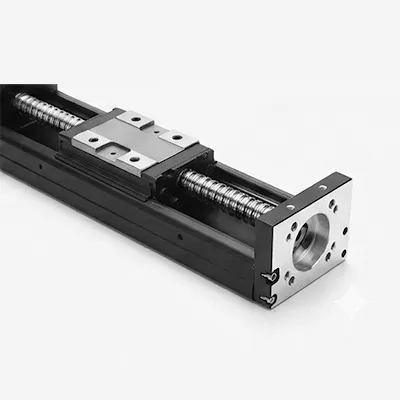
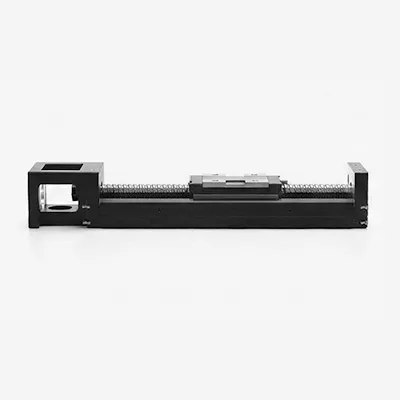
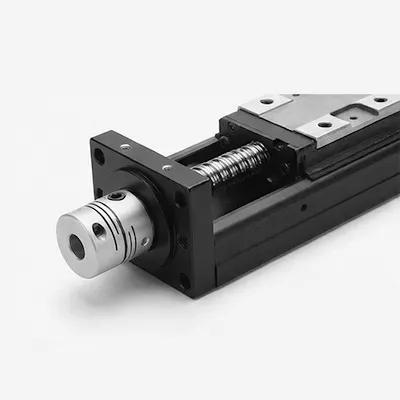
The KK40 is one of the core products in our single-axis robot series. It carries forward the KK series’ signature U-shaped steel base design, seamlessly integrating ball screws and linear guides within a body just 40mm wide. If you’re seeking a precision module that saves equipment space while handling moderate load pressures, the KK40 is undoubtedly your best choice.
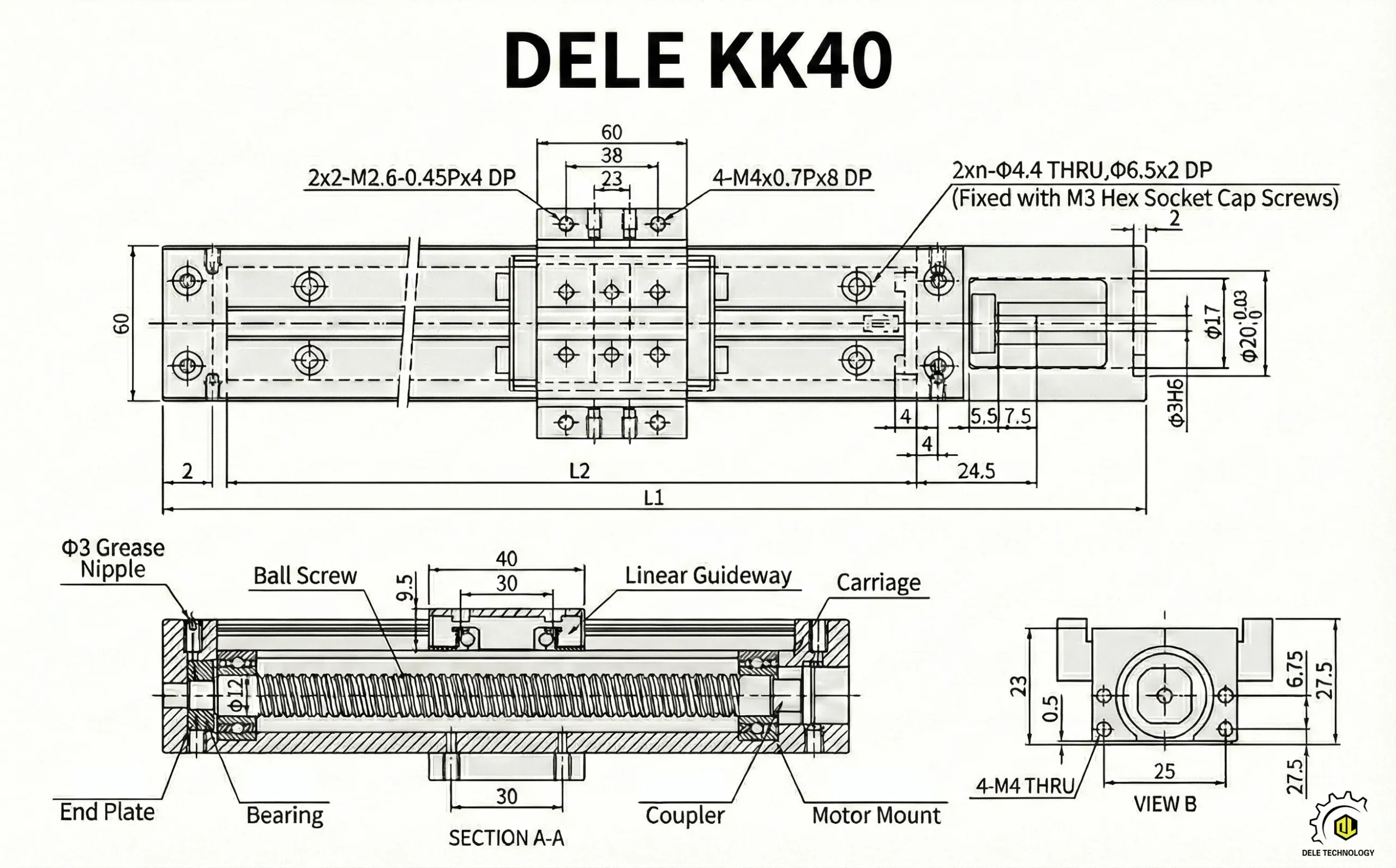
| Category | Parameter | Specification / Value |
| Basic Dimensions | Module Width | 40 mm |
| Module Height | 20 mm (Rail Base) / 28 mm (With Block) | |
| Rail Type | U-shaped Integrated Steel Rail | |
| Block Type | Standard Block / Short Block (Optional) | |
| Mounting Orientation | Horizontal / Wall / Vertical | |
| Drive System | Drive Mechanism | Precision Ground Ball Screw |
| Screw Diameter | Ø 8 mm | |
| Screw Lead Options | 1 mm / 2 mm / 5 mm / 10 mm | |
| Max. Stroke Range | 50 mm ~ 500 mm (Customizable) | |
| Performance | Accuracy Grade | Precision (P) / Normal (C) |
| Repeatability | P: ±0.003 mm C: ±0.010 mm |
|
| Max. Speed | Up to 550 mm/s (Depends on lead & stroke) | |
| Max. Acceleration | 0.5 G ~ 1.0 G | |
| Load Capacity | Basic Dynamic Load (Ca) | 2,100 N ~ 3,900 N (Varies by block type) |
| Basic Static Load (C0a) | 3,600 N ~ 6,500 N (Varies by block type) | |
| Allowable Static Moment (Mr) | Rolling: 35 N•m ~ 70 N•m | |
| Allowable Static Moment (Mp) | Pitching: 15 N•m ~ 35 N•m | |
| Allowable Static Moment (My) | Yawing: 15 N•m ~ 35 N•m | |
| Material & Environment | Main Body Material | High Carbon Steel (Standard) |
| Surface Treatment | Anti-rust Oil / Electroless Nickel Plating (Optional) | |
| Lubrication | Lithium-based Grease (Refillable via nozzle) | |
| Operating Temperature | 0°C ~ 40°C (No condensation) | |
| Cleanroom Class | ISO Class 5 (With optional cover & suction) |
As a precision module featuring an integrated high-rigidity U-shaped steel base, the KK40 is indeed durable and practical. However, even the best hardware requires proper usage. Through years of after-sales support, we’ve observed that module accuracy failures often stem not from the product itself, but from overlooking critical installation details.
This is our top priority. The KK40’s base is made of high-strength steel with exceptional rigidity—both an advantage and a challenge.
If your mounting plate (aluminum or steel) isn’t perfectly flat, tightening the screws will forcefully distort the module base. This imperceptible distortion causes erratic resistance in the slider’s movement and can even directly wear down the steel balls.
Our recommendation: Ensure the mounting surface undergoes precision milling or grinding to achieve flatness. Never attempt to “correct” unevenness by forcefully tightening screws—this will only damage the module’s integrity.
Many customers assume the KK40’s fully enclosed design means it requires no maintenance, forgetting it still needs “fuel.”
Lubricant is the lifeblood of the module. Without it, direct metal-to-metal friction between steel balls and rails will cause precision to collapse in a very short time.
Our recommendation: Although grease is applied at the factory, please “feed” it periodically based on usage frequency (e.g., every 100 kilometers or every 3-6 months) via the grease nipple on the slider. Ordinary lithium-based grease suffices—this simple step doubles its lifespan.
While robust, the KK40 has a weakness—cantilever torque.
If your load’s center of gravity extends far from the slider (like an extended arm), even within the rated weight, the resulting “lever effect” exerts immense pressure on the balls. This is called static torque.
Our recommendation: When designing fixtures, position the load’s center of gravity as close as possible to the slider’s center. If cantilever mounting is unavoidable, consult our technical manual’s “Allowable Static Torque” table or contact our technicians via WeChat to ensure the module isn’t overloaded.
While faster equipment is desirable, ball screw drives have physical speed limitations.
Especially with long-stroke KK40 models (e.g., 400mm+), excessive speeds cause slender screws to “resonate” and “whip” like a jump rope. This generates loud noise and can directly fracture the screw.
Our recommendation: The longer the stroke, the lower the safe rotational speed. If you require high-speed operation over long strokes, consult us immediately. Switching to a larger lead screw or adopting a synchronous belt module may be safer alternatives.
Our engineers are ready to provide you with consulting services.
We promise to keep your information strictly confidential
Upload drawings or send inquiry plans, our engineers will provide you with a manufacturability analysis (DFM) and quotation within 24 hours.