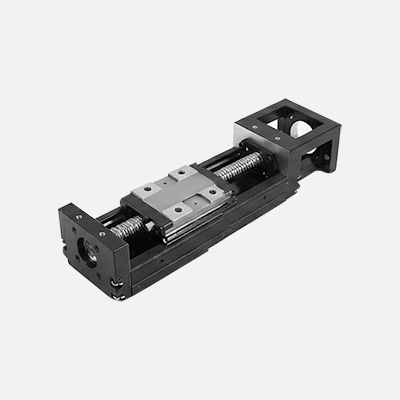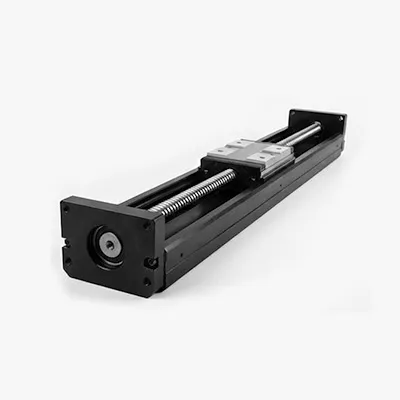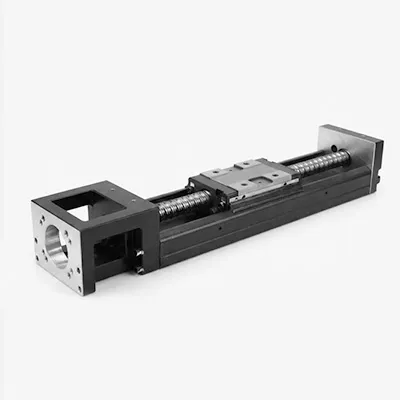
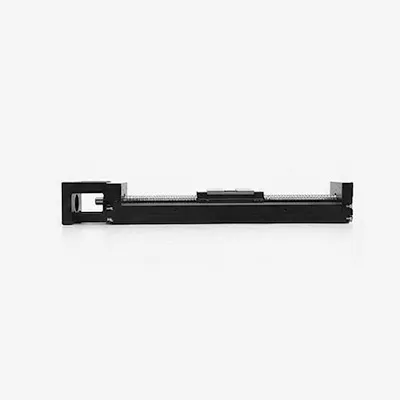
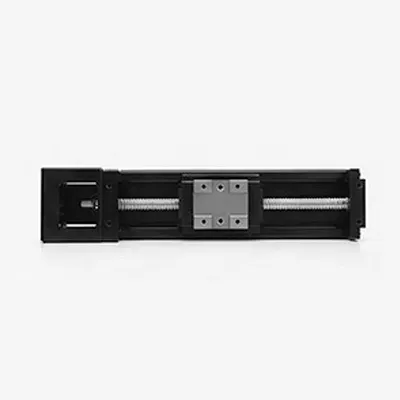
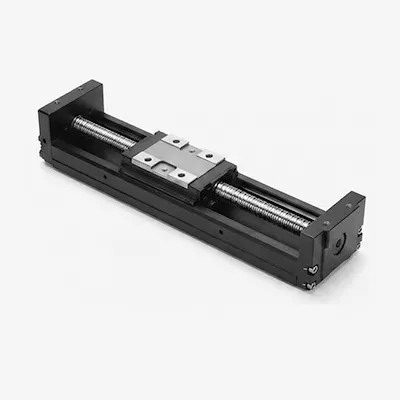
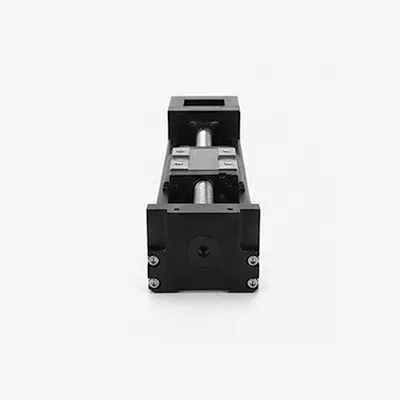
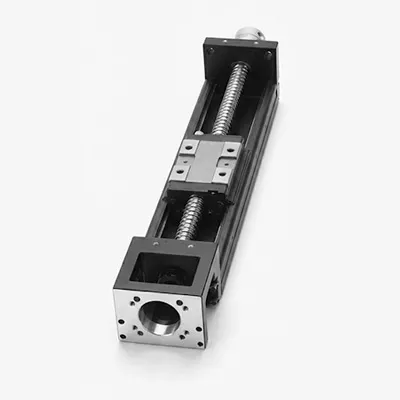
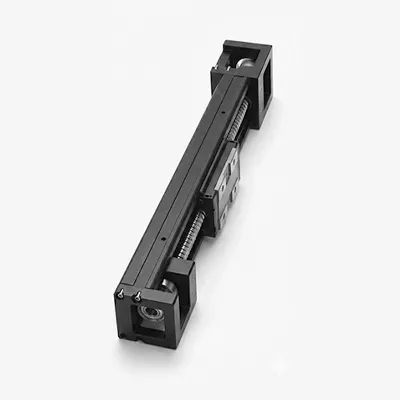
The KK50 is an advanced precision module. With a body width of 50mm, it significantly enhances rated load capacity and torsional rigidity while only slightly increasing overall volume. The KK50 is specifically engineered for automation scenarios where space remains constrained yet load demands are higher.
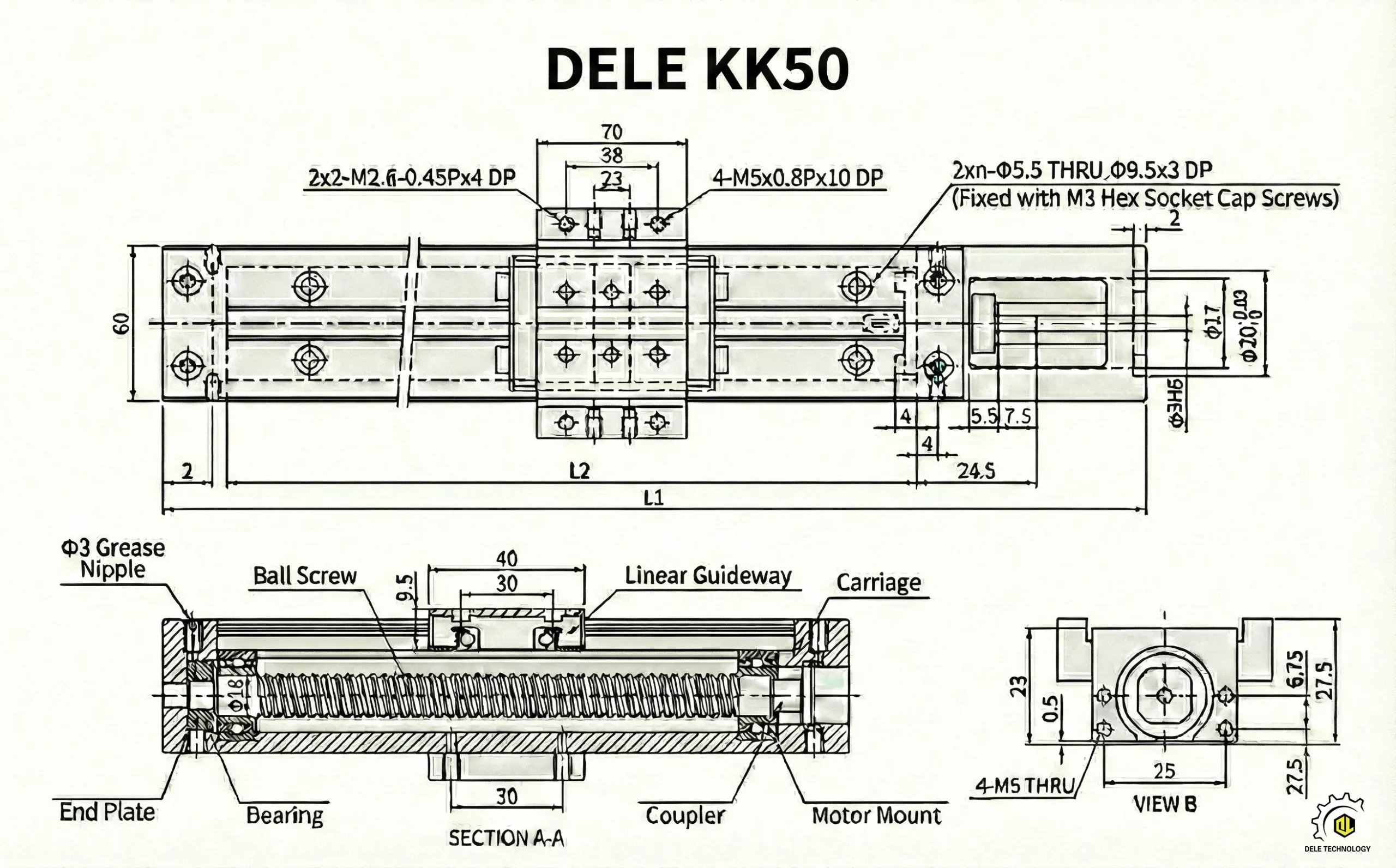
| Category | Parameter | Specification / Value |
| Basic Dimensions | Module Width | 50 mm |
| Module Height | 26 mm (Rail Base) / 33 mm (With Block) | |
| Rail Type | U-shaped Integrated Steel Rail | |
| Block Type | Standard Block / Long Block (High Load) | |
| Drive System | Drive Mechanism | Precision Ground Ball Screw |
| Screw Diameter | Ø 12 mm | |
| Screw Lead Options | 2 mm / 5 mm / 10 mm / 20 mm | |
| Max. Stroke Range | 100 mm ~ 800 mm (Customizable) | |
| Performance | Accuracy Grade | Precision (P) / Normal (C) |
| Repeatability | P: ±0.003 mm C: ±0.010 mm |
|
| Max. Speed | Up to 1,100 mm/s (Depends on lead & stroke) | |
| Max. Acceleration | 1.0 G (Recommended) | |
| Load Capacity | Basic Dynamic Load (Ca) | 3,800 N ~ 7,200 N (Varies by block type) |
| Basic Static Load (C0a) | 6,500 N ~ 11,800 N (Varies by block type) | |
| Allowable Static Moment (Mr) | Rolling: 90 N•m ~ 180 N•m | |
| Allowable Static Moment (Mp) | Pitching: 40 N•m ~ 100 N•m | |
| Allowable Static Moment (My) | Yawing: 40 N•m ~ 100 N•m | |
| Material & Environment | Main Body Material | High Carbon Steel (Standard) |
| Surface Treatment | Anti-rust Oil / Electroless Nickel Plating | |
| Lubrication | Lithium-based Grease (Refillable) | |
| Motor Compatibility | NEMA 23 Stepper / 100W-200W Servo |
Often, we see customers stubbornly using KK40 to handle heavy loads just to save 10mm of space, only to end up with equipment that wobbles during operation. The KK50 was designed precisely to solve these issues.
To maximize the performance of this 50mm-wide linear module, here are four practical tips we’ve compiled from real-world experience. We hope they help you avoid common design pitfalls.
Many engineers tend to push the limits when selecting models, often operating right at the upper edge of the rated load capacity. For example, if the KK40 can handle 10kg, they might load it with exactly 9.5kg.
During dynamic operation, inertial forces from emergency stops and acceleration can momentarily exceed the rated capacity. If your load is already approaching the KK40’s limit, decisively upgrade to the KK50. The KK50’s rated load and torque resistance are nearly double that of the KK40. This extra margin (Safety Margin) acts as the “fuse” ensuring your equipment’s long-term stable operation.
The KK50 typically features a 12mm lead screw diameter (larger than the KK40), resulting in inherently higher rotational inertia.
We’ve seen users pair the KK50 with a small NEMA 17 (42-step) motor, leading to slow speeds, low force, and step loss during acceleration.
Our recommendation is to pair the KK50 with a suitable motor. For basic applications, start with a NEMA 23 (57 steps). For high-speed responsiveness, a 100W or 200W servo motor is the ideal match.
When building XYZ three-axis platforms, the Z-axis is typically suspended vertically from the crossbeam. In this configuration, the module must withstand not only gravity but also significant bending moments.
The KK50’s wider U-shaped base offers substantial advantages here. Compared to the KK40, it resists these “bending” forces more effectively.
Therefore, if your Z-axis travel exceeds 200mm or the end-of-arm payload is heavy, prioritize the KK50. It effectively minimizes end-of-arm “nodding,” keeping your dispensing nozzle or gripper rock-solid.
The KK50 is often used for handling heavier objects. Even when power is cut during high-speed movement, inertia causes heavy loads to continue moving forward slightly.
Therefore, when designing stroke lengths, never calculate the effective stroke too tightly. If your application requires a 500mm stroke, we recommend selecting a 520mm or 550mm stroke specification. This extra distance accommodates soft and hard limits, preventing direct damage to the slider in case of uncontrolled movement.
The KK50 strikes the perfect balance between size and performance. Use it well, and your device will be both reliable and stable.
If you’re torn between the KK40 and KK50, or unsure how to configure your motor, feel free to send us your load parameters anytime. Providing a free load analysis is our pleasure!
Our engineers are ready to provide you with consulting services.
We promise to keep your information strictly confidential
Upload drawings or send inquiry plans, our engineers will provide you with a manufacturability analysis (DFM) and quotation within 24 hours.